ISSN-E: 3105-7926
ISSN-P: 3105-8817
- info@glopri.com
- Mon - Sat 8:00 - 18:00. Sunday CLOSE
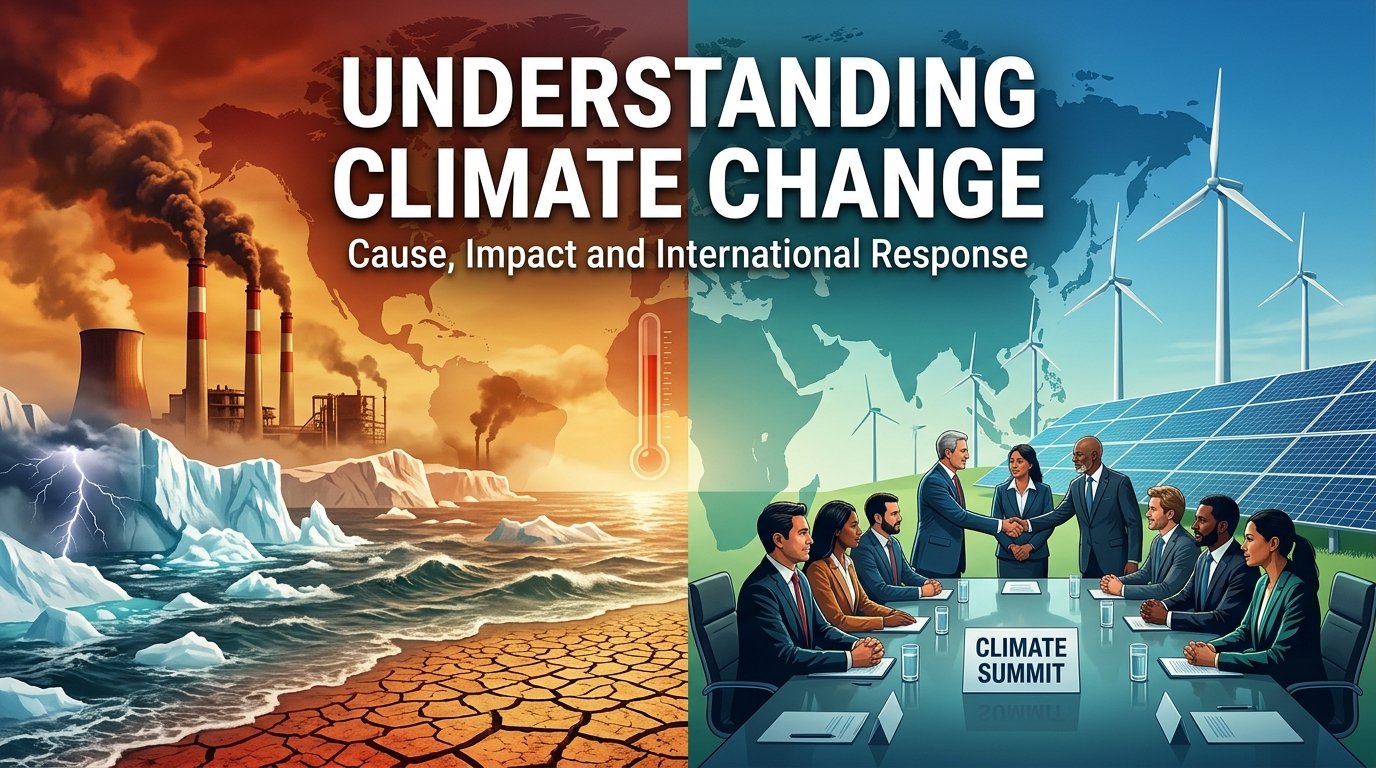
Climate change, driven primarily by fossil fuel combustion, deforestation, agriculture, and industrialization, accelerates environmental degradation and global warming. Its impacts include rising temperatures, glacier melt, sea-level rise, extreme weather, biodiversity loss, and risks to food security and health. International efforts promote emissions reductions and adaptation.
Climate change, Greenhouse gases, Paris Agreement, Renewable energy
Climate change is certainly one of the most important challenges for the 21st century for all humankind. It means the long-term variations in environmental conditions, including weather and temperature, that occur primarily as a result of human activity. The climate of Earth has undergone various changes throughout its history, but today these changes are occurring at a faster rate due to deforestation, fossil fuel utilization, and industrialization. Extreme weather, melting glaciers, rising temperatures, sealevel rise, and loss of biodiversity are some of the impacts directly caused by climate change. countries, Climate change is a problem that impacts all irrespective geographical location, of their economic development or political system. It jeopardises food security, water resources, human health, ecosystems and economic security. Climate change is increasingly recognized by scientists, governments, and international bodies as an urgent crisis that requires collective action. If solutions are not implemented, the environment, society, politics and economy of future generations could suffer from severe consequences due to climate change.
Climate change is a significant, long-term change in Earth's climate system over very long time scales. Changes in atmospheric conditions are called climate change, which is directly or indirectly caused by human activities (IPCC, 2023). Climate variations are natural phenomena on Earth caused by volcanic eruptions, natural radiation, and the atmosphere. CO2 emissions and the buildup of other greenhouse gases, such as CH4 (methane) and N2O (nitrous oxide), are the primary current drivers of climate change. These gases, known as greenhouse gases, retain heat in the atmosphere and cause global warming (IPCC, 2023).
The use of fossil fuels (coal, oil and natural gas) the largest contributor to greenhouse gas emissions and the principal cause of global climate change. Fossil fuel combustion produces vast quantities of CO2, which are emitted to the air by industries, transportation, power plants and households. Human use of fossil fuels has increased substantially since the Industrial Revolution, leading to a substantial rise in greenhouse gas (GHG) concentrations. Emissions are high in countries with significant industrial economies. The issue is further exacerbated by rapid urbanisation and industrialisation (NASA, 2024).
The forests are very important in absorbing CO₂ from the atmosphere. However, on a large scale, deforestation diminishes the Earth's ability to maintain carbon balance. Trees are typically felled for farming, urban development, and commercial purposes. With the loss of forests, carbon stored in the wood is released into the atmosphere, contributing warming (Food Organisation, 2022).
Agricultural activities are also a large contributor to climate change. Methane is released into the atmosphere in the process of livestock digestion, and nitrous oxide is released from fertilisers. The use of intensive farming techniques, land degradation, and overuse of water further harm the environment.
Factory manufacturing processes release pollutants and GHGs. Carbon emissions are significant from the cement, mining, and chemical industries. The pressure on the environment has grown worldwide due to fast industrialisation in developed economies.
Waste management and pollution can contribute to climate change. Methane gas is generated within landfills from the breakdown of garbage. Ecosystems are also damaged by plastic pollution and industrial waste, contributing to environmental degradation (NASA, 2024).
The Earth's temperature is rising, and it is one of the most apparent signs of climate change. The last few years have been among the hottest in recorded history, according to the World Meteorological Organisation (WMO). As temperatures increase, weather systems, ecosystems, and human activity are influenced. Heatwaves are more frequent and intense, resulting in health impacts, droughts, and wildfires in many regions.
Climate Change has increased the rate of glacier melt and polar ice caps melting. Sea levels have been rising due to melting ice, posing risks to coastal cities and island nations. The low-lying areas are at higher risk of inundation, erosion and relocation of people. The melting of Arctic ice also disrupts ecosystems and alters ocean circulation and weather patterns.
Climate change results in increasingly hazardous weather events, such as flooding, hurricanes, cyclones, droughts, and wildfires. It has been observed that many countries have suffered devastating natural disasters associated with climate change. Heavy floods in Pakistan during 2022 resulted in economic losses, displacement and destruction all over the country. The intensity of these floods has been attributed to climate change and the monsoon weather system (United Nations Development Programme, 2024).
Variations in temperature and rainfall influence agricultural productivity. Crop damage and decreased food supplies due to drought, floods and unpredictable weather conditions. Farmers in developing countries are more vulnerable because they are more dependent on climate-sensitive agriculture. Climate change could negatively affect food supply and prices, thereby aggravating malnutrition.
Climate change is a threat to wildlife and ecosystems throughout the world. Many plant and animal species do not fare well when temperatures, habitats, and other conditions change. The area’s most sensitive areas are coral reefs, forests, wetlands, and marine systems. Loss of biodiversity negatively impacts ecosystems and reduces their capacity to maintain environmental balance and support human life.
Climate change has many impacts on human health. Heatwaves can cause more heat stress and dehydration, leading to deaths. Air pollution aggravates respiratory illnesses like asthma. Affecting health systems and spreading infectious diseases are other ways climate-related disasters impact health. Communities impacted by displacement, disaster and environmental uncertainty could have a higher risk of mental health (WMO, 2023).
Developing countries are among the most vulnerable to climate change, even though they are responsible for fewer emissions. Many developing countries are unable to respond to environmental disasters and adapt to changing environmental conditions due to a lack of adequate resources. Floods, droughts, sea-level rise, and food shortages are significant threats to countries in South Asia and Africa, as well as to small island countries. Vulnerability is caused by poverty, poor infrastructure and population growth. For instance, Pakistan's GHG emissions are comparatively low, but the impacts are severe across various sectors, including floods, water scarcity, glacier melt, and heatwaves.
The UN has now embraced the Paris Agreement as a global climate change plan in 2015. The agreement will be designed to keep the global temperature increase below 2°C above pre-industrial levels, with efforts to limit it to below 1.5°C. The countries involved in the agreement pledged to cut their Green House Gases and enhance climate adaptation action (United Nations, 2015)
The Intergovernmental Panel on Climate Change (IPCC) offers scientific information and evaluation on climate change. Its reports enable governments to understand environmental risks and make policy decisions based on scientific evidence. The IPCC warns that immediate action is crucial to prevent catastrophic climate implications (IPCC, 2023).
Different countries are looking towards alternative energy sources such as solar, wind, hydroelectric and geothermal energy. Renewable energy is less reliant on fossil fuels and decreases carbon emissions. Technological innovation and green energy are increasingly the focus of global climate strategies.
Developed countries and international organisations provide climate finance to assist vulnerable countries in adapting to climate change. Disaster management, Sustainable Agriculture, Renewable energy projects and environmental protection programs are funded. But many developing nations say the money they are receiving is still insufficient for their needs and the magnitude of the problem at hand (World Meteorological 2023).
Climate change needs to be addressed on local, national, and international scales. Governments should implement stricter environmental policies and invest more in renewable energy and less in fossil fuels. The reforestation and conservation programs can absorb carbon emissions and protect biodiversity. Educational Institutions should raise environmental awareness and encourage sustainable practices. People can help by saving energy, reducing waste, taking public transport and buying environmentally friendly products. International cooperation is crucial to effective climate governance. Rich and developed countries should support poor and vulnerable countries through technology transfer, climate finance and disaster aid.
Climate change is an urgent worldwide issue with long-lasting environmental, economic, political and social impacts. The increase in global temperature and environmental degradation are largely due to human activities such as the burning of fossil fuels, deforestation, and industrialisation. Climate change impacts are now being felt through extreme weather events, sea-level rise, biodiversity loss, and impacts on food security and health. Developing countries are not as culpable for emissions, but they are more vulnerable, and it will be their generation that will suffer the consequences. Calls to action, such as the Paris Agreement, the development of alternative energy sources, and international climate cooperation, are increasingly recognising the crisis. However, increased action and joint responsibility for a sustainable future will be needed. The battle against climate change must be fought together by governments, organisations, and individuals, all acting for a common cause: protecting the environment through sustainable development and international cooperation.